Thursday, 1 December 2011

Cambodian delights

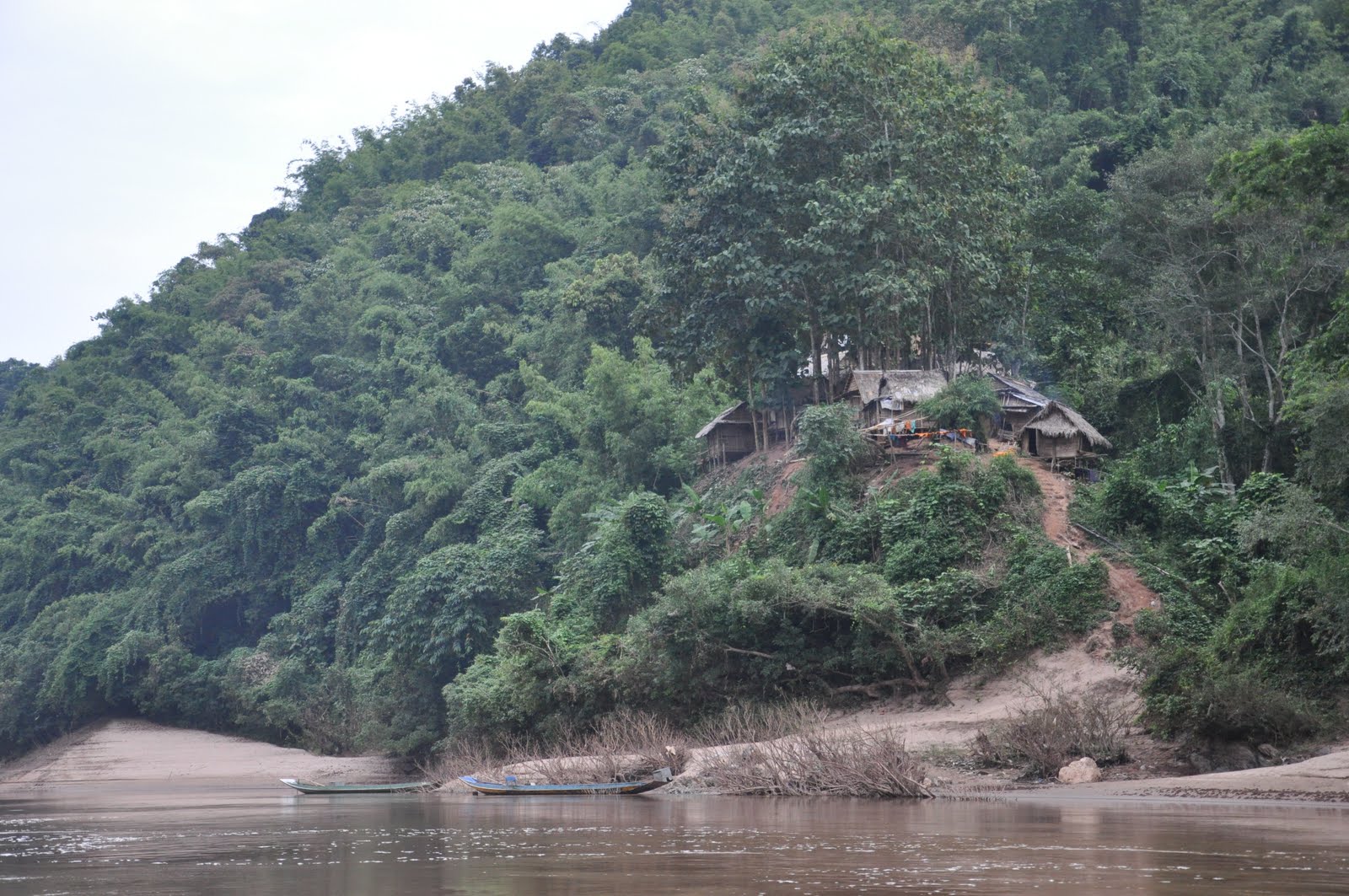
We hit Cambodia with a great sense of elation, mainly due to sailing through the border with nary a comment about our bikes. We’d expected some difficulty, James remained convinced a simple bribe would suffice to get us through, but I held a more pessimistic view. Tales of abandoning motorcycles on the border were many, a sketchy few claimed there weren’t any problems. Uncertainty reigned, we hesitantly approached the border and had severe doubts as to what was happening when commanded to leave our bikes well away from the security post. We need not have worried, no-one mentioned our bikes. Once procuring an exit stamp we merely had to push them through the 100 metres of border control and then rode them up to the Cambodian side. An hour saw us through both sides of the border, and away we went all the way to the casino. Not to gamble, but to exchange the last of our Dong. (Photo: Boat life - Sihanouk Ville port, Cambodia)

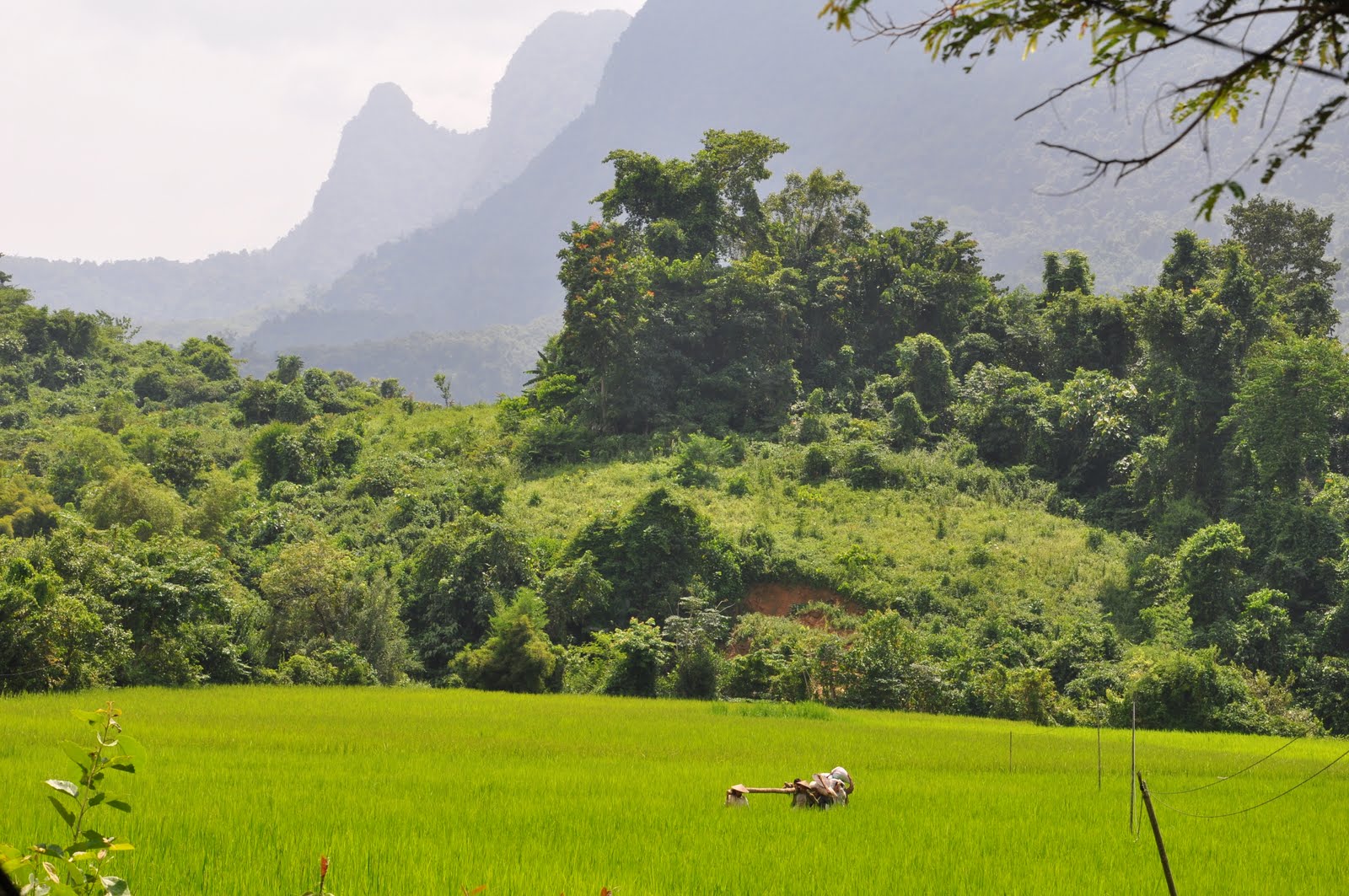
An instant change in scenery occurred, which seems to be a familiar situation when crossing many borders. On our approach there had been loads of crops, neat patches of paddy, and numerous racks drying off palm fronds for roofing materials. Cambodian was a rough and ready scrubland in comparison, but it didn’t last long. Pretty soon vast swathes of paddy filled the entire horizon; these weren’t the small muddy beds separated by earthen banks, one enormous area of constant paddy dominated the area. Until reaching the flood plains connecting with the Mekong it was simply unbroken paddy with smalls copses of woodland dotted here and there. Even after the reaching the flood plains there was still plenty of rice paddy, anywhere that wasn’t completely inundated with water was given over to growing rice. Where there was water that is where the people live, whole families in tiny thatched shacks on surprisingly small rickety vessels. The main commercial catch is shrimp or prawns, but they sell anything they can catch, snails, frogs, water snakes, eels and even a small amount of fish. (Photo: Paradise lost - Initial view of Kaoh S'dach Island, Cambodia)

House styles were different too, being mainly of wooden construction on stilts, with slightly more decorative paneling on the eaves and apex of the roof. Up curved protrusions sprout from the gable ends, like buffalo horns I believe. Older places are made exclusively with thatched roofs, often these older houses stand side by side with newer, more substantial, houses with wooden tiled roofs. It seemed as if the old places were still in use for some purpose of another, it’s quite likely to be for other family members, expansion to cater for an ever increasing extended family. Though elders are still revered here the importance of the extended family is diminishing. At 75yrs old Ohm lives alone as one of only ten inhabitants of Kaoh Totang, her two sons have both moved away to the big city. Beyond fishing there is little to do in these parts, making money and participating in a modern world is as important for many islanders as it is for western folks. As always the bright city lights are a massive pull for youngsters, I guess it’s just as well they number of kids on the islands far outweighs the adult population. (Photo: Ohm's friend, helping harvest grass for roofing material - Kaoh Totang, Cambodia)

Phnom Penh, sin city, the highest concentration of foreigners I’ve mixed with since Luang Prabang. Hanoi may have had more but I didn’t stay within the main tourist enclave, preferring a small hotel tucked well away from most. We took a similar approach to accommodation when reaching the capital of Cambodia, taking individual rooms in a fairly plush hotel. We were the only western folks there, but within walking distance of the river area where most tourists hang out. If anyone thought this country was old worldy, with traditional values and disdain for the wanton nature of foreigners, forget it. The rest of the country is certainly very much like that, but not the capital. Foreign bars abound, scantily clad girls hustle for your custom as you walk past the bars. As you enter such places you’re surrounded by girls, it’s their job to escort you to a seat, to entertain you and keep you there as long as possible. They aren’t prostitutes, though I understand private agreements can be made, many are students supporting their studies. Apparently they are actually well paid, though I found the whole situation distasteful they didn’t waste time hassling you if you showed no interest. (Photo: Beach at Nomads Guesthouse - Kaoh Totang, Cambodia)

But the big city was nothing more than a rest stop, we were both fairly tired. The ride through Vietnam had been almost constant riding in some awful conditions, we have a full month in which to enjoy Cambodia and neither of us were in any hurry. James has friends setting up a dive centre in what’s renowned to be a beautiful part of the coast near Kaoh Kong. I had thought of going my own way from Phnom Penh, but the thought of a deserted island to stay on was too much to resist. I wanted my own space, so a hut on the beach to myself sounded perfect. Having a travel buddy has proved to be fun, this has happened rarely in my life and never to this extent; it’s been about six weeks in each other’s company now. We seem to compliment each other, and James does a good job at recognizing the times I’m getting het up with someone and quickly moves in the dissolve the situation. I do seem to have got a bit tetchy under the influence of alcohol recently, more than I’m used to so I need to be careful. (Photo: View from beach- Kaoh Totang, Cambodia)

Nights drinking till dawn aren’t the best solution to taking care, but they happen at times. You only have one life, why not enjoy it; so if having a drink is proving fun, why not? Of course the flip side is the abysmal hangover the next day, which is how we departed Phnom Penh. I’d love to say the scenery was gorgeous, which much of it was, but I was oblivious. The roads were straight, the going was good; even in our delicate state we went twice as far as we imagined that day. That was largely due to the realization that an absence of guesthouses forced the issue, we saw none after the towns immediately surrounding to the capital. Sihanouk Ville was reached just before dark, giving us time to contact the dive centre on Kaoh Totang. Unfortunately the only guesthouse was closed for another two weeks, in effect it made the whole reason for me coming this way a waste of time. But if you trust in events they have a surprising way of working out. (Photo: A select few of the hoards of kids on the island - Kaoh S'dach, Cambodia)

Miraculously James’ friend Sarah’s boyfriend happened to be in town that night. It was a tenuous link, but we had an escort to take us over to the Island the following day. Without the knowledge of the guesthouse owners we arrived and stayed on the Totang for three days, helping out during the days with the preparations for the start of the season on 1st December. I guess that saved the day, especially for me. Feeling a little like a hanger-on I felt more obliged to pitch in, so I did, for up to 6 hours some days. The atmosphere on the island was great, I constantly lost myself in a reverie of sight and sound; staring across the empty sea with nothing but the sound of lapping waves and cicadas. My accommodation was nothing more than a thin mattress on the dive shack floor, but it sufficed, I slept well. And in this manner a week flew by, a bit of work, some snorkeling, good food and good company.(Photo: Sunset from my guesthouse - Kaoh S'dach, Cambodia)

All good things come to an end though, the dive centre was in the process of moving, so it was time for me to vacate the premises too. Kaoh S’dach still isn’t a large island, there’s only one single track road the length of it. Most houses are built over the water, connected by dangerous walkways of loose, rotten planking. It can be precarious negotiating them in daylight, it’s damned dangerous in the dark or burdened with baggage. But on these rickety structures their whole world hinges. Sanitation is practical under the circumstances, wooden sheds with holes over the open seawater. It doesn’t inspire me to swim off the dock, though one poor guy seems to have the dubious job of donning snorkel and mask whenever there is any underwater work to be done. Chickens are raised without setting foot on dry land, being fed scraps of compostable material but existing almost exclusively on grain. There’s also a ready supply of fighting cocks, forever being groomed lovingly by their owners. I’ve not heard of an actual fight but the intention is obviously there. (Photo: Quarrying limestone blocks- Kaoh S'dach, Cambodia)

The kids are pure magic though, a chorus of “Hello, what’s your name?” follows you everywhere. A hoard of them will grasp both your hands, pumping furiously, “hello, hello, hello, what’s your name?” It doesn’t seem to matter with most what you reply, they’ll only laugh and repeat the phrase again and again. The only thing that bugs me is the complete lack of dental health, the majority of them have more rotten stumps than teeth, they’re going to be the first toothless generation. Fizzy drinks and sweets must be the culprits; I can’t imagine they’ve been available for too many years here, it’s a 4 hour boat trip from the mainland. OK, some adults teeth leave a lot to be desired, but they’re the minority. With kids it’s the norm, I can’t believe this isn’t recognised as an issue with the islanders. Though the level of motivation is very low among the local populace, for many it’s an effort to prise themselves out their hammocks to serve customers in their shops. Much easier is to get kids to do all the work, which is very common also. (Photo: Over the moon, King Hunter - Kaoh S'dach, Cambodia)

Cambodia is a wonderful place to experience. The people are friendly and helpful, they don't tend to over charge because you're a foreigner, maybe with the exception of boat captains. Food from the markets is exceptional, simple, tasty and cheap. Transport seems a bit hit or miss but this adds to the experience, riding through the country has posed no problems. Accommodation is cheaper than in Vietnam, and of a reasonable quality. Personally I'd rate it alongside Laos, which I adored.

Tuesday, 15 November 2011

Provincial ousting

I’d loved to have kept tales of Vietnam with pictures of the country, but I’ve got out of sync. In truth it's all the fault of the dreaded security forces, I blame them for everything.

Primarily the room full of guys weren’t all so bad, the initial anger and stroppy behaviour came from one main culprit. He just happened to be the highest ranking of those present and the one worst for wear on the drinking stakes. There’s little you can do in such circumstances, none of them could communicate in English and we certainly could do no more than greetings and pleasantries in Vietnamese. However apologetic I tried being it had no effect, they weren’t about to let us leave. Any effort to make for the door was blocked and they became more insistent that I sit down, which I’d adamantly refused to do. Demands to see our passports had to be complied with really, but I made a point of retrieving them once they’d been inspected. They tried taking my camera off me, but I wouldn’t let them handle it, keeping it in my own hands and allowed them to scroll through. It wasn’t too ugly, they weren’t getting physical with us; the second time a guy demanded I hand over the camera I refused. It’s mine I gestured, not yours. (Photo: A sudden change in traditional building styles - Nr the Vietnam border, Cambodia)

We were definitely in a quandary, and due to a lack of communication it wasn’t one we could deal with. Very few solutions were available, neither of us had the number for the British Consulate, so we each tried to phone native speakers we’d met earlier on our travels. And at last we discovered the problem, we’d inadvertently entered a restricted border zone. Having a local on the phone proved helpful in more than one way, she could explain our mistake and maybe get them to see sense and let us go. We got some sound advice too, don’t give them your phones, cameras or any valuables; the chances are they’d keep hold of them and use them to extort money from us. I’m not sure if her bawling out the official was that helpful though, apparently he wouldn’t listen to reason so she gave him an earful. Probably that wasn’t exactly in our favour, whatever we might have hoped for in easing the situation only got worse. (Photo: Vast swathes of paddy, not small individual patches separated by earth banks - East of the Mekong, Cambodia)

The stroppy one found a clause in a book of regulations, exhibiting great pleasure in managing to pin something on us. So they wrote up a couple of forms and told us to sign them, no bloody way mate. Bored at getting nowhere with us they basically left us to sit on our own as they sat in the shade outside smoking and sniggering between themselves. Honestly, it was like a group adolescents who’d pulled off a good prank, we still assumed they’d get bored and let us go eventually, or cut to the quick and ask for a bribe. After four and a half hours a higher ranking officer turned up with an interpreter. It was simple she said, there was no problem, they realised we’d made an innocent mistake but we needed to sign the forms and then we could go. Was it really that simple, “we’ll then be free to go?” I asked. “Yes, you’ll be escorted away from the border and then free to go”. The lying bitch, they still insisted loading our bikes into a pickup was only to drop us back into Pleiku, on the main highway. But no, we were taken to the regional headquarters and held once more by Public Security officers. (Photo: Wetlands plains - Still many miles before the Mekong, Cambodia)

It was tedious, being assured there was nothing to worry about, that they simply had to interview us before release, so everything was officially recorded. Hours more passed, it got dark, and having searched all our possessions, viewed hundreds of photos, they produced statements of all the details of our trips through Vietnam. For the second time they lied outrageously; declaring we were in no trouble, it was merely a formality, sign the statements and we could go. You’d have thought once bitten twice shy, but I couldn’t give a damn. At least we weren’t locked up for the night, but we still weren’t released, not fully. Escorted to a hotel our documents were kept form us, we had to return again in the morning. We weren’t to leave the hotel, except for feeding ourselves. And in the morning they hit us with a fine of $100 each, the petty, deceitful bags of shit. (Photo: Family bath time at home in a water world - Approaching Mekong flood plains, Cambodia)

We were furious, and having gotten the Consulates number I phoned and asked them to intercede on our behalf. But no, they had us over a barrel. It’s officially illegal for foreign nationals to own motorbikes in Vietnam, and neither UK licenses or International Driving Permits are adequate to drive with, you must have a Vietnamese license. In no uncertain terms they told the Consulate the fine would stand and unless our attitude changed they would involve the traffic police and throw the book at us. It mortally wounded my pride to kowtow to the group of stiff necked officials sat around the table, smirking at getting one over us. Not only did they refuse to budge on the harshest fine for the border offense, they ordered us out the province too. Our passports and licenses were retained until we’d both paid our fines at the government bank, and then told to leave immediately. James was seething, I took time to make my point with the subordinate who’d acted as escort and interpreter. I wanted to give him something to consider should he reach a position of such power as to levy out fines to unsuspecting foreigners. Yeah, for sure our bike riding is flouting local laws, but it’s very common and none of the authorities blink an eyelid at it. (Photo: Prawn and shrimp nets laid up for evening- Mekong Tributary, Cambodia)

I’m glad it didn’t ruin our views of Vietnam, I’ve enjoyed the ride through immensely. From the flooded plains of rice paddy outside Hanoi, the beautiful national parks, rugged Central Highlands, raging river valleys and gently rolling wooded hills towards the south. It’s a wonderful place to ride any bike, even a 100cc crock of Chinese crap. Difficult times happen to test your mettle, I’m glad to say we laughed off all the testing times. As James struggled in two foot of mud and I stood giggling at this predicament, he didn’t lose his humour. Soaked through and facing yet another day of pounding rain, we didn’t delay our departure, we just got on with it. Rural people wherever your go are the salt of the earth, Vietnam is certainly no exception. Joyful smiles, excited waves and vigorous handshakes showed clearly peoples delight at seeing us. In our 1,000 mile bike trip, we saw only a handful of other foreigners, that was enough for us, we went to mingle with the locals. (Photo: Water, water as far as the eye can see - Mekong floodplain, Cambodia)

And now we’ve come to Cambodia, a country that instantly struck an accord with us both. But that of course is another story.

Bust in the border zone!

James, my current travel buddy, was met in Hanoi, he turned up at a bike dealer while I was inspecting the bikes they had for sale. Like myself he wanted to ride the length of Vietnam, unlike me he was looking for a companion to share the journey with. Let it not be said I’m not open to suggestion, so when he proposed we travel together I accepted. In the last couple of months I’ve enjoyed the company of many other tourists, for the guy who generally remains content with his own company this has been a nice change. It’s not as if I shun company, I am after all a sociable type animal. But it’s rare for me to travel with others, since China I’ve hung out with a string of fellow travelers, and taking it that step further by moving on to the next destination with them. It can be nice having company, but it can be restrictive too! I’m a man with a mind of his own, but I’ve been happy to share my time and compromise on always doing what I want without consultation with anyone else. In the past I've dumped off fellow riders who've ridden with me fairly quick, but I've been enjoying company during this journey. Riding is a bit different, from casual company, I like setting my own pace, whether fast or slow. James seemed an easy going guy, I still thought I might find it a testing time; I'm just too damned finicky. (Photo: Winding through the limestone karsts - Phoung Nha National Park, Central Vietnam)

There are two routes through Vietnam referred to as the Ho Chi Mhin Trail, a coastal route and the quieter, inland route. Down the coast it basically follows national highway 1, a hugely busy trunk road that is heaving with tour buses and trucks driving at death defying speeds making suicidal overtakes. The coast road is also where the bulk of tourist destinations are situated, and like nowhere else the Vietnamese really do have a knack of fleecing tourists. Invariably, foreigners are charged more than locals, for almost everything. And like everywhere else, the more tourists the worse this enigma becomes. Personally I’ve had enough of biased pricing, I detest being a target for greed and deception. So we plumped for the inland route, partly to avoid excessive financial exploitation, but mainly for the magnificent areas of natural beautiful. It passes though rural Vietnam, hundreds of miles of unspoilt land winding delightfully through areas barely changed for hundreds of years. (Photo: Communal bathing - Nr Phoung Nha, Central Vietnam)

Of course I refer to the land itself, little could survive the devastation caused by millions of tons of defoliation agent dropped by the American military during their attempt to annihilate Vietnamese attempts at independence. Also there are the disproportionate numbers of cancer victims in the country, thought to be contributable to Asian Orange, another of the gifts from Uncle Sam. In effect they not only slaughtered phenomenal numbers of innocent citizens, they left a legacy to blight the countryside for a very long time. The wonderful limestone karsts still tower above the mist-laden ravines, aged rain forests still harbour a wonderful array of birds, primates, reptiles and bugs. But so much of the countryside is only secondary growth, and the modern Viet people themselves are raping this at a rapid rate. Luckily there are protected areas, and far fewer amounts of timber are being felled in these. (Photo: Gaining ground - Phoung Nha National Park, Central Vietnam)

There’s been a marvelous amount of fantastic country to pass through, vast areas of flat paddy field with water buffalo wallowing in the post harvest mud. There’s been a distinct lack of rice terracing since I left the far north, as we got to hillier regions in the central area there was virtually no rice. Wild hills and natural forests ruled supreme in the centre of the country, virtually no human intrusion despoilt the wet and misty wonderland. Almost every day brought a whole new scenery, gently rolling hills of rough grazing one, surging torrents of muddy maelstroms ripping through wide valleys the next. Wherever we’ve been the astonishment of the villagers has been touching, all we have to do is stop to have people come and gather around us to greet us and practice the one or two questions they can muster in English. The areas have all been poor, rurally most houses of wooden and in need of repair. Kids are bare foot and grubby, only in their school uniforms do the have a semblance of tidiness. Without fail they are all smiling and full of joy, it gets tiring on the arms waving at the many kids calling out to us. In towns we've had adults coming to shake our hands and bid us welcome. These aren't areas that see many foreign visitors, and only one person has shown the slightest displeasure at our presence. (Photo: Misty haven - Phoung Nha National Park, Vietnam)

Before, when I said it had been quite wet, was definitely an understatement; that was only four days into the ride south on the HO Chi Mhin trail. Since then, day after day, the rain has lashed it down on us, with barely any respite. We rode through running torrents of water cascading down from the hillside, the road was awash and the resultant spray only increased the wall of water that battered us. My normal bike waterproofs can deal with such a deluge, the Vietnamese suit certainly can’t. No matter how hard I try the water seeps through, first at the level of my belly button, then gradually it manages to work it’s way into my crutch area. How fortunate I am, it’s warm here, so I don’t end up both cold and wet. Actually the weirdest feeling is having water pouring out my sleeves when I stop and let my arms drop. With my nice new Gortex shoes completely sodden, everything in my rucksack wet and the clothes I wear dripping wet something had to be done. So I bought wellies, a heavy-duty rain cape for my pack and doubled up on the rain jacket. The result? Dry feet, slightly drier torso and merely a damp crutch. At least my belongings didn’t get any wetter; they were still damp from the previous days though, a musty small pervades every article of clothing I possess. There's good reason why I only buy reliable bike gear generally, being soaked is a miserable experience; if only there was such gear to be had in Vietnam. (Photo: Only slightly wetter than our ride - Central Highlands, Vietnam)

I shouldn’t complain, James faired even worse than I did, he was soaked right through. We’ve been riding through rain every day, then for two whole days we had to ride through torrents of the stuff, it never eased off in the slightest throughout the day or night. Sods law rules supreme though, once we made the effort to improve our waterproofing the rain eased off. Which was just as well, getting wet may have been uncomfortable but the landslides were the biggest problem. They were a common occurrence in the Central Highlands, they came thick and fast, huge slicks of mud cascading down the hillsides uprooting trees and bringing them toppling into the carriageways as well. Most are simply a matter of taking it easy, picking a path through the shallowest of the gloopy, slippery overspill. Many posed much worse problems, having to plough through quagmires of mud that swallowed the wheels past the axles. I managed to chug through even the worst, not so my poor buddy. Seeing me plunge into a sinkhole of slimy crud, he decided to be clever, and pick his way carefully around. (Photo: A brief respite from the rain - Nr, Kon Tum, Vietnam)

Stuck fast he could neither move forwards nor backwards, his only hope was me coming to his rescue, by wading through oozing mud half a metre deep. Standing and laughing I suggested he come and give me a piggyback, I couldn’t believe he wanted me to wade through while he stood high and dry. A young local guy stopped and came to help, sinking up to his knees and losing his sandals in the process. Between the three of us we got him out, this was before the wellies were bought, we were all a complete mess. Next time he got stuck he wasn’t on his own, a couple of locals had the same problem, each stopping and assisting the other. Deep oozing mud blocked the whole road, again there was no easy way through and it was obviously claiming plenty of victims. As for me I took the plunge, went straight for it and kept the damned throttle rolled on, never letting up for the slightest moment. Once through I stood back and had a good laugh, especially when James came to a rather soggy stop in the middle of the worst of it. I damned near lost my new wellies getting him out, the other three guys getting my foot jammed under his front wheel didn’t help any either. At least wellies proved a lot easier to clean than my shoes had done. (Photo: Traditional south Viet house - Tan La, Vietnam)

But it did eventually stop raining, we got two days of nice weather; so good off came the jackets and away went the wellies. What a pity we’d passed the best of the scenery, finding ourselves on a main trunk road was horrible, neither of us found it acceptable so we made plans for an alternative route. On the map a small road ran for over 200km alongside the Cambodian border, it looked the ideal chance to see a part of the country other tourists had failed to reach. How true it was too. The road turned out to be a dirt track, to complete the whole 200km in one day would be pushing it, but it was worth trying. It was hard to find but it got there in the end, it was slow going but we were determined, if only we’d have got further than we did. At the first village, after only 10km a guy loitering outside a café waved us down. He was with another couple dressed casually in uniforms, James stopped, so I pulled over too and grabbed the map to confirm we’d found the correct track. There didn’t seem to be any problem, we asked where we were, pointing on the map the route we wanted to take and our final destination. As is generally the case in rural Vietnam none spoke English, so we tried our best to pronounce the appropriate village names and reiterated where we thought we were on the map. We did seem to have navigated right, but they kept pointing the way we’d come and telling us to use the main highway to Dak Miel. It was obvious the main highway was the common route taken, so we continued to point at the more obscure route, saying that’s the one we wanted not the busy highway. When they signaled for us to follow one on his bike we merely thought they were showing us the way to go. But no, only a few hundred metres later they led us into an official compound. We arrived and parked, amidst a jovial reception by a mix of guys in civvies and uniform. There was handshakes all round and tea served by our hosts. With much consulting between them they continued to point back to the highway, it was only when one of them drew a line across the track and signaled the road was blocked, or closed, that we thought we understood. At that moment we conceded the point and agreed that we'd go all the way back to the main route and head south that way. And that was when we realised it was not to be as simple as that. We made to leave and suddenly one drunk and surly official slammed his hands down on the table and shouted that we couldn’t leave. That was when it dawned on us there might be a problem, what the problem was we had no idea, but they certainly weren’t so friendly any more. And they were most emphatic that we were going nowhere. (Photos: 1] Coffee growing landscape - Duc Co; 2] Special delivery - Chon Than, Vietnam)

Thursday, 3 November 2011

On the Ho Chi Min Trail

As it turned out I was wrong about the supposed Honda Win, it’s actually made in China, not a Honda at all. As there was very little else on the market my choices were limited, the only other bikes had almost no chance of getting spare parts for if needed. The last thing I wanted was to be broken down in the middle of nowhere unable to repair the damned thing. The Win is about the most popular bike here, so repairs and spares will prove easy to come by. Which is just as well, I have a feeling I’ll need plenty of both on our 1,000 mile ride south. Loaded up with my pack a brief test ride proved how unreliable first impressions can be. Pulling away the front end wobbled uncontrollably, the weight was too much for the suspension. It wasn’t a promising start, but redistributing the weight improved it a hundred fold. I started having doubts about the sincerity of the guy I bought it from though. Why can't people be more honest? (Photo: Rain forest clearing - Cuc Phoung National Park, North Vietnam)

Expecting SE Asia to be hot and steamy it came as a surprise to hear that the weather forecast for the first few days of our journey to be for heavy rain. But what can you do, it’s all part and parcel for riding a bike. Come rain or shine the road is still there to be ridden, and if you don’t ride when traveling you don’t get anywhere. At least we had decent weather for our first day, finding our way out of Hanoi would have been even more unpleasant in the rain. It was awful anyway, traffic in the city is chaotic, finding our way onto the right road was a complete pain. But we managed, with the help of numerous stops and questioning innocent bystanders. Stopping frequently to ask was the only way to do it, few road signs existed so it was the only way to navigate through the maze of chaos. Unfortunately we’d almost cleared the city limits when James got a message informing him that a parcel had turned up at the DHL office. So we had little choice but to turn back and hunt out the office. (Photo: Running repairs - Rural mechanic's, North Vietnam)

Eventually we didn’t leave the city behind until gone 2.30pm, so it wasn’t going to be a great distance covered that day. For the first hour or so we still had to contend with busy highways, buses and trucks ran almost bumper to bumper, motorbikes wove in and out overtaking or undertaking, whichever proved easiest. It was a manic initiation to riding my gutless fake Honda. Whenever I stopped finding neutral was murder, stalling in heavy city traffic was a nightmare. In the end beating the crap out of the footrest improved this, the gear lever was snagging on the slightly bent peg which restricted free play. It amused the roadside mechanic who lent me a lump hammer, he offered to move the gear lever round but I found it more pleasurable to beat it mercilessly. As the saying goes, “if in doubt, give it a clout”. (Photo: River people - North Vietnam)

Route 6 from Hanoi is a busy trunk route, once we turned off onto highway 15 things got quieter straight away. I’d purposely chosen an inland route to avoid the main road down the coast between Hanoi and Ho Chi Min. Our first port of call was to the Cuc Phoung National Park, a mere 120km from Hanoi. Our late departure meant it was pushing it, we ended up riding a rough track in pitch black conditions, through very muddy and wet conditions. Our lights were almost non-existent, unless revving the bikes visibility was down to a few feet. So we took it in turns to lead the way, neither being that keen to be in front. When I was behind James I could see better by using the light cast by his headlight, mine made a good job of lighting the foliage in the trees overhead though. I couldn’t adjust it any better than it was, riding at night is normally a no no for me; it certainly will be from now on. (Photo: Limestone karsts - Cao Pho, North Vietnam)

Riding blindly in the dark, unsure of exactly where the park was, it was nothing short of a miracle when a guesthouse appeared out of the gloom. Even more miraculous was the family restaurant less than a mile away, they couldn’t understand a word we spoke but we managed to get food and beer. Most the food was actually edible. Whilst the boiled rooster wasn’t the tastiest meal I’ve had it was a hell of a lot better than the instant noodles and chicken intestines served to us a couple of days later. Our trip has been through rural Vietnam, accommodation is rare and food is spartan. However much I think you have to take what you can I couldn’t stomach the intestines, it was like tasteless rubber. There aren’t many places to eat on our route, and fewer who can understand a word of English. Often we're taking pot luck with what we get, but there are limits. I coped fine with snake, though only discovered what it was after devouring a heap of it, it was actually quite tasty. (Photo: Paddy and karsts - Highway 15, North Vietnam)

The scenery has been delightful, though slightly obscured by overlying mist or heaving rain. Most days have seen us get completely soaked, I’m glad I decided to get a set of waterproofs. I nearly decided not to bother and make do with the jacket I already had, I only wish I could keep my feet dry too. Not that it puts us off, it isn’t cold and we’re still making good headway. The countryside is all wallowing water buffalo and peasants in coolie hats. Somehow they recognise us as westerners from afar, I didn't think we stuck out that badly; we’re on common bikes wearing common waterproofs and crash helmets. It’s nice though, everyone we pass shouts out greetings, flashing bright smiles. Our only questionable encounter was in a restaurant, the owner stuck two fingers up at us and walked away when we tried ordering a couple of beers. I can only assume bad feeling still runs deep with some of the older members of society here. I wonder if having an amputee in the family had anything to do with it, amputees have been a common sight in the countryside. Maybe in light of the devastation created by western governments it's not surprising some people still hold grudges. Let's face it the Vietnamese were brutalised by the French then had the shit blown out of them by the Americans. (Photo: Where the buffalo roam - Phong Nha, North Vietnam)

Friday, 28 October 2011

Hanoi hangover

As often happens in Sapa, the mist descended and the clouds shed their load. After two days of writing and correspondence on the Internet I was getting cabin fever, but a noon check out and night train meant I was forced out for some fresh air. The Black Hmong must have got used to me, I’ve not been subjected to their charming characters for days, in fact since my first day there. Despite virtually camping outside my hotel their attention was for the wealthier clientele further up the hill. I was always met with cheery welcomes and, I like to think, genuine regard for my health and happiness. I must say I like them, I’ve yet to meet any who have sold their souls for the tourist dollar. Happy and smiling after hours of walking they take the time to talk to you, it isn’t too hard a sell and they rarely seem fed up despite the fierce competition between them. (Photo: Black Hmong and police intervention – Sapa, North Vietnam)

With the rain easing off there was no excuse left, if I hadn’t got my arse in gear I’d have seen none of the surrounding villages. Heavy mist obscured my view across the conical shaped hills littering the landscape, but thinned out as I descended to the tribal village. Cat Cat, nestled on the slopes of a lovely hillside, surrounded by paddy with water buffalo grazing the remnants from harvesting. Terraces climb the steep slopes, many are no more than 0.5m wide, their curving earthworks shaped perfectly to fit the natural contours. Giant steps leading heavenward, before harvest strips of verdant green crown each and every step of the way, punctuated by rich brown abutments. It is still a local village, though lined with stalls selling whatever they deemed might appeal to tourists. The embroidered goods are locally made, you can see the women sewing as they walk along the road without once breaking pace. (Photo: Paddy platform and conical hills – Cat Cat, North Vietnam)

A very clever system of using water to pound grain is still in place, though had no signs of recent usage. Bamboo guttering feeds water into large hollowed out wooden scoops on the end of quite hefty wooden beams. The fulcrum is very close to the scooped end, at the other a pestle is fitted, which sits in a wood lined pit. Once the water fills the scoop it drops down disgorging its weighty load, lifting the pestle from its resting place. As the water empties the weight of the beam drops the pestle back into the pit and, if it were filled, would pound the grain into flour. It’s a brilliant labour saving device, one I’ve never come across before. Of course it depends on a steady flow of water. Not only that though, to make it efficient a whole series of them are necessary, so hilly terrain is also vital to get enough working at the same time. Unfortunately, though there are many still happily tipping and filling in a leisurely rhythm, they all show signs of neglect. Looking into the pits not a single one had any residue of grain or flour in it. (Photo: Water powered pestle – Cat Cat, North Vietnam)

Behind the commercial frontage the village life goes on pretty much how it has for eons, but the women spend an overwhelming amount of their time catering to the peripheries of the tourist trade. They aren’t involved in the more profitable end of the business, transport and accommodation, merely the provision of craftworks, of which some of the work is beautiful. For once I found myself feeling guilty for not buying from these women, but it isn’t what I do when travelling. I have neither the room nor the motivation to encumber myself with examples of local craftwork, there’s too many places, too many different examples. I question myself whether or not to buy something, but it’s only to assuage my guilt. Instead I put money into the local economy by eating locally as often as the café orientated towards the western visitors. (Photo: Pork scratchings – Cat Cat, North Vietnam)

Although I’ve only been in Hanoi for one day Sapa seems so far away. It’s always a bit strange catching nighttime transport, you drift off to sleep in one environment and awake to a totally different one. Coming from the tranquil setting of Sapa (don’t get me wrong here, it’s a bustling tourist venue) spilling onto the city streets of Hanoi at 5am is a whole new world. Though expecting throngs on crafty city dwellers hustling for my attention, I found my arrival easy to adapt to. One or two taxi drivers were very persistent, but giving a firm no soon got rid of them, once they realize you are not about to be swayed they’ll move on to an easier target. Once everything settled down, during which time I sat and had a coffee, I chose my own taxi and ensured he was using the meter correctly. By 6.30am I sat beside the Lake of the recovered Sword watching the local populace indulge in their morning limbering up and exercise routines. It was very reminiscent of China. (Photo: More paddy formations– Cat Cat, North Vietnam)

A busy day marked my initiation to Hanoi, a city I found quite likable. It is busy, the traffic is mayhem and people are constantly stopping you and using any pretext to sell their wares or services. I ask you, where else do shoe shine boys try and insist on polishing your canvas sandals? I covered all the Old quarter and Hoan Kiem areas searching hostel notice boards for adverts of bikes for sale. There wasn’t many, and it took up my whole day going to every single one I could find. Of the bike dealers, everything was overpriced and of dubious quality. They generally buy cheaply off tourists and sell to the next one who walks in, with a markup of a couple of hundred percent. The bikes are constantly driven 1,000 miles or more between Saigon and Hanoi, rarely receiving any attention other than to refuel. I guess the adverts of tourists selling their bikes as they depart from Vietnam reflect this too, they have the impression the price they paid the dealer is a realistic one. I was lucky to only pay $320 for a reasonable example of a 100cc Honda Win, which is actually a Taiwanese engine built under a Honda license. Only time will tell if it was a good buy. (Photo: Coolie, but maybe not cool – Hanoi, Vietnam)

After a day of settling in it was a great relief to go out on the town, 17 Cowboys was a worthwhile venue. A Wildwest bar with a difference, the live band played an eclectic mix of classic rock and the cute waitress' sported the shortest and tightest of mini skirts. Surely a bar with plenty of oriental promise.

Sunday, 23 October 2011

Biking and Bac Ha

My last night in Laos was seemingly pleasant, having spent the night eating and drinking with the locals. As they were playing Patenque for beer money I thought I’d rather watch than end up paying for everyone’s drinks. One of the guys was a guesthouse owner I’d met down river, it was a nice to socialize with him away from the confines of his business. It was still an early night though, facing a 5am start I wasn’t about to stay up until the late hours, besides the Laoitians are not exactly late night revellers. It was only the following morning that I discovered a heap of money missing from where I kept it stashed amongst my luggage. Daft maybe, but you have to keep it somewhere, personally I don’t like to keep the bulk of my money on my person. £125 is a lot to lose by petty theft, and I’m sure it was stolen by the owners or staff of the hotel. So, If ever stopping over in Muang Khoa, be very careful about staying in Keophila 2 Guesthouse. (Photo: Banana plantation – Nr Loah Cai, Northern Vietnam)

A few of us caught the bus into Vietnam, all continuing onto to Sapa from the border town of Dien Bien Piu. Our night there was a laugh, with an Ozzie couple a local bar was the first stop. And weren’t we the centre of attraction, my dreads seem to grab people’s attention. At least it isn’t always in a negative way, but I’m still surprised at people’s reaction; it’s only a bloody hairstyle. First of all it was only the female bar owner who was curious, and then she called her friends over. Three of them twiddled and played with my hair, marveling as I showed them how to dread it. I’m sure one wanted to chop them off, luckily she wasn’t too serious and seemed satisfied to gather it together and secure it with a hair band. Laughing at the photos taken of us, as she played with my hair, her friends wanted in on the act. So I ended with a young woman squidging into my lap and wrapping her arms around me for a photo. Now that had nothing to do with my hair, and when the inevitable proposition came I laughed and said no thanks. Establishing that I was single was actually the funniest part, I knew what they were getting at so kept trying to say Jane was with me, not with Dave. He misinterpreted what she was saying and was pointed at himself and me, thinking she was asking who smoked. Of course the situation did get cleared up, which is when it was suggested I might be interested in the young woman. (Photo: Roadside pose – Pho Lu, Northern Vietnam)

Sapa was destined to be my first port of call, on recommendation of too many people to ignore. Two long days on buses were necessary to get there, so by the time I arrived all I wanted was to find a guesthouse and relax. That was before encountering the charming but persistent Mhong women. Walking into town with a pack on is a dead give away, fresh blood, the ideal opportunity to ingratiate themselves upon you. From a punter’s viewpoint it’s a gauntlet that has to be run, and running is the best way to deal with it. As you apologise and attempt to walk away they follow you, all round town if they think they might find a chink in your armour. And they’re by no means the only touts for business, it seems everyone wants to get their claws into your pockets. Whether for hotels, motorbike hire, food or bars the touts are out. And as I said a rucksack makes you a prime target. (Photo: Mhong women at the cattle market – Bac Ha, Northern Vietnam)

But I felt sorry for the Mhong, they walk miles into to town and back most days, purely to try and sell a few souvenirs to tourists. The sheer numbers of them, and their selling technique of completely engulfing tourists in a tide of eager women, can’t make for high sales volume. Some of their embroidered bags and jewellery are exquisite, but as soon as you consider having a closer look other women will pour forward, “you buy from me, you buy from me”. I’m pleased to say walking round town since my initial arrival hasn’t attracted the large groups of them. But they wait on the hill opposite my hotel, for the rich tourists to come by. All the hotels further up hill from me are the big plush one’s, but the police won’t allow the ethnic groups within a few hundred yards of them. Hence the women wait in ambush further down the hill, as many as thirty of them. If they creep further uphill the police hustle them away, prodding them with their batons until the willingly descend. (Photo: Various Mhong tribes women– Bac Ha, Northern Vietnam)

All the villages of this area are of one Mhong tribe or another, it’s the black Mhong nearest to Sapa. By hiring a bike I took an overnight trip to the market town of Bac Ha, where they have infinitely more colourfully dressed tribes women. It’s strange though, most towns women wear normal western dress, whereas without fail the outlaying villagers are adorned in traditional clothes. Even the guys coming in form the villages tend to dress traditionally, which is are to see amongst many indigenous people around the world. It’s often the men who stay at home with the kids while the women come to town to ply their wares. Apart from being inundated with sheer numbers they are friendly and pleasant, at least they befriend you rather than simply hassle. They’re well versed in enough English to make your acquaintance and extract promises of buying only form them. (Photo: Grazing the paddy – Pho Lu, Northern Vietnam)

The bike ride was great fun, especially after having the drive chain adjusted. With the exception of 30km along the river, it was all steep gradients and tight twisting turns. Due to mist laying heavy in the hills the views weren’t stunning, but it couldn’t detract from the pleasure of riding through tropic environs. On the way back I took a longer route, staying off the main road. Huge numbers of tourist buses had descended on Bac Ha as I was leaving, so finding small villages that didn’t suffer such intrusions was my ideal for the day. And I found just what I wanted. Anytime I stopped people would appear to see the foreigner, surprised at the sight of me. Hardly any spoke English, so communication was by hand, but I didn’t linger too long. A few words of greeting, a minute for them to admire the bike I was riding and off I’d go again. They ride mainly step-through scooters of minimal size, seeing a 150cc bike, with gears and a clutch raised many an admiring comment. (Photo: Buffalo buy – Nr Pho Lu, Northern Vietnam)

Thursday, 20 October 2011

Luang bang bang!

Cor blimey, hoards of westerners and a vast array of accented English was the biggest impression I got from Luang Prabang. I haven’t seen so many tourists in one place for eons, certainly not on this journey. And of course where the hoards descend the locals flock to take advantage, except Laos isn’t really like that. Without doubt there were plenty of locals offering their services for transport, none were overly pushy though, all accepted a polite no thank you. Touts for guesthouses were very thin on the ground. Even the nightly craft market was a leisurely affair, no hassle off hawkers and no overbearing demands to buy anything. It isn’t exactly a large city, it is very laid back though. Tourists are only really en masse in two streets, the riverside road and the one on which the nightly market is held. Despite the presence of so many, even I could tolerate the tourists. (Photo: Farming newly exposed area of riverbank – Ou Nam, Nr Luang Prabang, Laos)

The night food market was slightly different, it isn’t exclusively tourists there, but few Laoitians sit and eat, they tend to do it take away style. The basis of most stalls is simple, load your plate as full as you can, for about 1€. A table of platters stand before you, typically a choice of 15-20, all vegetarian. If you want meat pick what you want barbequed and that’s another 1€. There’s little need for the meat, but for carnivores it makes for complete satisfaction. Of course the knack is to pile your plate as high as possible, get as much for your money as you can. And of course that’s precisely what I did the first night there, the second I held back a touch more, it was too much for me and I hate wasting food. It gets a bit cramped and the various stalls do a brisk trade and want a quick turnover, hence they’re keen for you to eat up and sod off. So there is little chance to relax over a long cool beer, but they cater well for tourists, there’s always the crafts market and plenty of bars. (Photo: Bamboo raft – Ou Nam, Nr Muang Gnoi, Laos)

I seem to be hitting a good number of festivals on this trip, it was the local Buddhist celebration, which I’m embarrassed to say I never remembered precisely what it was about. I does last a few days though, and culminates in a firework free for all, which was brilliant fun. But first of all is the boat racing, dragon boats that is. None of your namby-pamby western rowing, this is Hawaii five-o style without the outriggers. The crowds were out in force, and for once the locals outnumbered the tourists. The town itself was nigh on deserted, but along that stretch of the Mekong it was chaotic. I must admit though, few seemed to take too much notice of the races themselves, the picnics were out the beer was flowing and life gave way to carnival. Throughout the three days boats could be seen slowly being built, some more than 5m long, all destined to be lit up and floated down the river for the grand finale on the last night. (Photo: Water buffalo– Ou Nam, Nr Muang Khoa, Laos)

Health and safety be damned, it was utter mayhem and everyone had immense fun, well at least the locals and my small group did. Number one priority, forget all about any firework code. Number two, buy plenty of fireworks because they last no time what so ever. Bear in mind that most are small with a very short burn time, they’re also dirt cheap, 30p buys ten mini bangers, or bees. They were being lit and thrown everywhere, into the road, at peoples feet, into the path of cars, literally anywhere. And no, it wasn’t just irresponsible adults it was mainly kids, to the delight of adults close by. I must admit to holding one too long, the explosion tingled a bit but wasn’t enough to hurt or damage. Whilst it did seem utter pandemonium there was some semblance of supervision for the very young, the adults would light the fireworks for them and allow them to sling them into the road. (Photo: Riverside village – Ou Nam, Nr Muang Khoa, Laos)

Many tourists looked less than impressed, but the locals lapped it up. One actually explained that they did keep an eye on their children, they did ensure they weren’t too over the top. The river itself was aglow with thousands of illuminated boats, candles flickering from within crepe paper creations. Garlands of palm fronds and candles floated down, gathering in clumps along the riverbank. How none of the moored boats caught fire was beyond me. In the sky a continuous stream of Chinese lanterns continued to be released for hours, it was an amazing spectacle. Both garlands and lanterns are released for good luck, to make you wishes come true. I didn’t worry about wishes that can never be, simply cackled with laughter as we threw more fireworks, sharing them around between the kids surrounding us. (Photo: Ferry crossing – Ou Nam, Muang Khoa, Laos)

That last night was a great release for me, I’d spent days at my computer chasing publishers and planning the next stage of the trip. I wanted to cross into Myanmar overland, but it’s no longer possible. By land it’s only possible to travel close to the border, the surrounding area is closed to foreigners. It looks like I’ll have to wait until I leave Asia, then I can fly in on my way home. So next will have to be Vietnam, which I should cross into tomorrow. I’ve a month visa and intend to travel north to south. In many ways I’ll miss Lao, but I will be back, of that I’ve no doubt. I’ll miss the monks banging their huge drums, cymbals ringing in the background. Some of their music and chanting is enchanting, sure makes you want to move your feet. It was also a delight to see them letting off their own fireworks within the temple complexes. They’re a bit more devout here than seemed in Tibet, so it was nice to see them let their hair down; well they would have done if they weren’t bald. (Photo: Local temple – Muang Khoa, Laos)

Monday, 10 October 2011

Tales from the river bank.

Setting off upriver was easy and relaxed, it stayed that way for the weeks I spent there too. Accommodation was cheap at about £2.50 a night, there was indeed no internet and electric only ran for three hours each night, plenty of time to charge up the laptop and allow up to six hours of work each day. I make it sound well disciplined but it wasn’t, I spent much more time relaxing than writing. As I devoured book after book it became obvious how deprived of reading material I’d been. What really tipped the scales was a little coffee house/bookshop, so that got plenty of visits from me. My guesthouse was the furthest end of the village, quiet except for the various poultry and a mystery night visitor to the Laos woman next door. Luckily their coupling was neither prolonged nor noisy, I didn’t lose enough sleep to bother moving. (Photo: Along the River Ou - Muang Gnoi, North Laos)

Muang Gnoi itself is the main village on that stretch of the river, there’s little above a cluster of huts within miles of it. Accessible only by boat you’d have thought the noise of traffic wouldn’t be as bother. As there are few boats without engines that isn’t the case, though it’s a far cry from city traffic. It isn’t a developed tourist destination, but there are a couple of hundred bungalows/huts scattered around the village. A couple of establishments have comfy bungalows, in well maintained enclaves, most are only a few huts overlooking the river. Menus are reasonable, having a mixture of westernized Laos food and random items of curry or sweet and sour. The only problem is the lack in choice, almost all the cafes had the same menu, the Indian restaurant was the exception. There was another in Nong Kiew, why would Indian nationals come to Northern Laos to set up a business? Neither seemed as quiet as many of the Laos restaurants though, but I don’t think they’re going to manage early retirement either. (Photo: Fresh cave water - Muang Gnoi, North Laos)

There were kids everywhere, from barely toddling all the way up, rarely with any adult supervision. Siblings took care of each other, not always with good grace. Which makes it sound worse than it actually was, I saw no fractious behaviour from any of them. But the look of determination of one lads face as he cycled like fury to escape the clutches of his wobbly sister. She only wanted to play with her big brother, but for a lad who’s struggling to master his bike without the stabilisers a taste of freedom from her wails was more attractive. The kids we passed in the boat upriver were hilarious. Playing slides down the sandy embankment they stopped to greet us, running to the highest point and waggling their bare arses at us while jiggling up and down. That was the boys anyway, though in all honesty I wasn’t trying to discern their sex. I don’t recall any with long hair, maybe the girls don’t get to play naked in the river. The river’s quite fast flowing, but the kids aren’t shy of it at all. I was assured that all the villagers, both young and old can swim. (Photo: In a paddy over the karsts - Nr Banna, North Laos)

Laos and its people have impressed me, they aren’t necessarily forthcoming but are generally happy enough to acknowledge you and wish you a good day. In the village you could easily go the length of the dirt road without having to wish all and sundry best wishes. But it was common to hear a sweet young voice calling, “Sabai dee,” accompanied with a slight wave and shy smile. No-one gets impatient except the occasional mother with a demonstrative child, and there doesn’t seem much of problem with alcohol fuelled fury. Guys may often have a drink during the day, but I never saw any blind drunk, none sprawled comatose across the street. There isn’t much to do in the area, few ways to make a buck or two. Low level farming, subsidized by fishing, is the traditional way. Tourism brings in the big money. (Photo: Delivery men arriving - Banna village, North Laos)

Like many isolated areas of the world the young want to experience the bright lights, the big city. So there’s a lot of migration to Luang Prabang and Vietiene, if they’re going to college there is no choice but to live in the city. It hasn’t caused a marked reduction in village populations, so many of them come back to their quiet little village and enjoy a more relaxed lifestyle. At the rate of reproduction I’m surprised if the figures aren’t steadily climbing. In a village where the lights go on at 6.30pm and back off at 10pm people have to find someway to entertain themselves in the dark hours. The old enjoy the protection of the extended family, the security of a home and food. It looks like most families share one large, open living space. Almost everything is built from timber and natural materials, the guesthouses generally have a more rustic look that the unimaginative blocks with tin roofs that the locals favour. (Photo: Lowering level on the River Ou - Muang Gnoi, North Laos)

Hiking in the close vicinity to the main village gave a few breaks from reading and writing, a few caves and vantage points made it worth the effort. Banna was a village a couple of hours walk away, in the middle of the paddy fields. And it was in a just such a place where an old lady carefully unwrapped a cloth bundle to reveal some sticks of opium. Smiling sweetly, she slightly raised her eyebrows, a polite and unassuming gesture, simply inviting interest. With detached amusement I gave my head the barest of shakes, placed my hands together and just as politely gave her a firm no. Then she went back to playing with her baby grandchild, oh the simplicity of village life eh? The day before a couple had gone out there and left some exercise books for the kids, I swear the torn pages used by the old guy for smoking the local tobacco were exercise paper. So whatever way you look at it, those exercise books are appreciated out in the sticks. (Photo: Cave cricket - Pha noi cave, Nr Muang Gnoi, North Laos)

The local caves are interesting, the first two I saw were the least interesting, but the third was great. It went in for about an hour walking and had a host of beasties to gawk at. The first were crickets with really long tentacles to feel around in the total darkness. I doubt if they faired very well, they were the low end of the food chain. They would have been easy prey for the spiders and other hunters, one was a kind of short fat centipede with only about twenty legs. Now that was a touch nerve wracking, it was large and moved very fast down the rock face towards me. It looked big enough to take on even the largest of the spiders I saw in there, and that would have covered the span of my hand. A colony of bats were the last of the creatures I discovered. They were hanging far up in the middle of the cave roof, gradually migrating to darker recesses as I blinded them with my torch and flashlight. (Photo: Half a mile in - Pha noi cave, Nr Muang Gnoi, North Laos)

Small wonder I’ve written so little in the last week, I’ve not even done my journal, but the book is done and dusted. Corrections made after the proofread, the epilogue and foreword written, and even the dedication. Which is why I’ve come to the city, so I can use the internet and find the right publishing company. I said ages ago that I didn’t want to self-publish, I wanted to see my book on the shelves of bookshops. At this stage I just want to see it between covers and available, but I must find the right company, which is proving hard to do. One guy sounded great, not the cheapest but a package that suited my ideas. Then I discovered he’d had a pretty vicious list of allegations made against him on the internet. I must say the people brutally attacked him on line, so I’m having serious doubts about using him. In fact I’d be mad to, he does promise a good deal but does he delivery what he promises.